
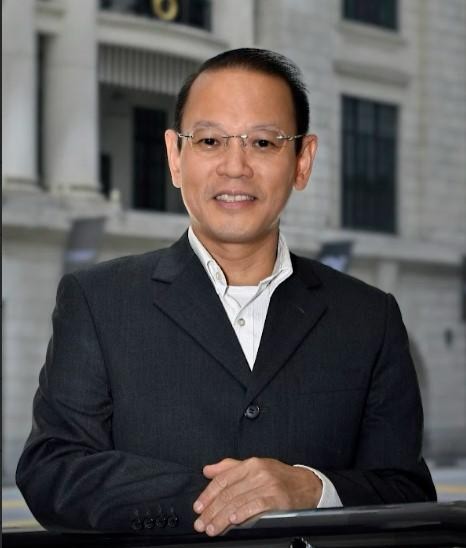
"Oiltek is a beneficiary of price increases in both vegetable and crude oil,” said Henry Yong Khai Weng, CEO & Executive Director of Oiltek International Limited
By TEE LIN SAY
linsaytee@suketv.com
31 March 2026, 5:00pm
KUALA LUMPUR – New listings on Bursa Malaysia do not generate the hype they used to, thanks to the phenomenon of companies with run-of-the-mill businesses coming on board every few weeks.
Thus, when a company with world class agriculture-technology capabilities seeks to list on Bursa Malaysia, the market perks up.
Oiltek International Ltd is a Singapore Exchange (SGX) Mainboard-listed company proposing a secondary listing on the Main Market of Bursa Malaysia. It has appointed M&A Securities as the advisor for this exercise.
To be certain, Oiltek isn’t coming to Bursa because of a lack of demand from Singaporean investors.
At Oiltek’s closing share price of S$1.31 on March 30, an investor who has held the shares since its IPO would be sitting on an almost 10-fold return.
Oiltek was listed on the SGX Catalist board in March 2022 at 23 cents, and was subsequently transferred to the Mainboard of SGX-ST on 6 June 2025. Since then, and despite a two-for-one bonus issue, Oiltek’s share price has continued its upward trajectory.
Year to date, Oiltek is up 87%, since its share price broke out last Friday.
Oiltek’s price earnings ratio has always been in excess of 30 times. The consistently high multiple accorded to Oiltek by investors could be attributed to its strong growth – not just over the last five years (where its grown by a compounded rate of 27.9%), but also in the past 20 years.
This growth comes despite having a cash pile of approximately RM100 million in its books as of FY25, with zero debt.
The interesting bit is that Oiltek is in fact a Malaysian company, with its roots tracing back to its principal subsidiary incorporated in Malaysia in 1980.
In fact, a large part of the group’s total workforce of approximately 100 staff are based in Shah Alam, Selangor.
Oiltek is very much a home-grown vegetable and edible oil processing company, although listed on SGX.
Oiltek’s chief executive officer and executive director Henry Yong Khai Weng is very much a born and bred Malaysian.
He’s your typical super smart Chinese high school achiever who was top of his class and scored straight As while studying in SMJK Sam Tet Ipoh, in Perak.
Naturally, he graduated with a First-Class Honours degree from the Faculty of Chemical Engineering, University of Malaya. This was on the back of multiple scholarships too.
A Company Built on Intelligence
Yong’s introduction to the world of vegetable oils started with his first job in 1997 when he joined Carotech Sdn Bhd.
Back then, Carotech was a pioneer manufacturer specializing in extracting palm mixed tocotrienols (vitamin E), mixed carotenoids, and phytosterols from oil palm fruits.
Subsequently Yong joined Oiltek in 2008 and has been helming it since.
Oiltek provides integrated refinery process and engineering solutions across the global vegetable oils value chain. Its operations span edible and non-edible oil refineries, renewable energy and product sales and trading.
To-date, Oiltek is also actively expanding its footprint in the renewable energy segment, with a particular focus on sustainability-related initiatives, including sustainable aviation fuel (SAF) supply chain.
Oiltek’s key differentiating factor is that it is a process inventor which has a comprehensive range of proprietary processes across the different segments of the vegetable oil industry.
“Our strength is that we are process inventors. We are strong in inventing new proprietary processes which produce more efficient results and higher-quality products,” says Yong.
Similar to how Nvidia evolved from a specialized gaming graphics chip designer into the dominant engine of the Artificial Intelligence revolution, Oiltek has become a vital engine in vegetable oils industry, particularly in the palm oil processing value chain.
Whether its processes for biodiesel, biogas, oil and fat fractionation system or even the production of palm oil with low colour intensity, Oiltek has the ability to better the existing process.
It is this competitive advantage that has enabled Oiltek to patent eight of its own proprietary technology processes so far, includes the process patent for non-methylation phytonutrients extraction from palm oil which is capable of extracting and concentrating the high value naturally occurring nutrient compounds in the crude palm oil via a downstream refining process.
Oiltek remains a proprietary vendor of such phytonutrient extraction plants, says Yong.
Therefore, while the majority of its jobs are derived from EPCC (engineering, procurement, construction and commissioning) contracts, Oiltek’s key appeal to customers lies in its in-house proprietary process expertise.
To date, Oiltek has an orderbook of approximately RM350 million, and this will likely grow as the months go by.
“Our ability to constantly secure projects is supported by a client base of more than 780 clients across 38 countries over 5 continents. We also have several representative agents across the globe. This keeps us very busy,” says Yong.
Not surprisingly, Oiltek has constructed and commercialized hundreds of operating plants worldwide, including building one of the world’s largest integrated physical refineries and specialty fats complexes.
Strong Financials
Yong adds that Oiltek has grown steadily since he joined the company in 2008, and has maintained a consistent dividend track record since 2013.
This reflects the company’s value of rewarding shareholders over time.
Oiltek pays not less than 40% of its earnings as dividends every year. At its current share price of S$1.31, the stock is yielding 1.76%.
Oiltek made RM32 million in net profit on the back of revenue of RM211.4 million for its financial year ended Dec 31, 2025 (FY25).
Excluding foreign exchange losses of approximately RM8.2 million in FY25, Oiltek’s net profit would have surged 48.7% to RM40.2 million.
Gross margins of Oiltek for FY2025 continue to climb to 32.5%.
“The higher margins reflect the proprietary nature of the projects, procurement savings, and project completions. Margins remained high despite the stronger Ringgit,” said Phillips Capital in a March 13 update report.
With approximately RM100 million bank balances with zero debt, Oiltek is also in a net cash position.
“Our core business is steady and gives us a certain base. It is with this buffer created from our core business, that we are ready to embark on our next chapter of growth – and that is our focus into Sustainable Aviation Fuel (SAF),” says Yong.
Renewable Energy and SAF – The Next Big Thing and Beneficiary from Both Escalation of Vegetable and Crude Oil Prices
Yong says that moving forward, Oiltek’s focus and exponential growth will be on the development of renewable energy and SAF projects.
This therefore transforms Oiltek to become a beneficiary when prices of both vegetable and crude oil increase.
The business model going forward will be for Oiltek to potentially exploring becoming an equity partner in the renewable energy or SAF project via a stake, therefore generating recurring income for the company.
“In an SAF project for instance, we aim to participate as a master contractor and execute the entire infrastructure of the SAF hub – this would include their refineries, offices and plants,” says Yong.
Yong notes that the majority of Oiltek’s business and orderbook is currently made up of EPCC and turnkey jobs mainly in both the Edible & Non-Edible Oil Refinery segment.
He hopes to change this in the mid-term as SAF, and renewable projects gain traction and momentum.
SAF is a low-carbon jet fuel produced from diverse feedstocks like used cooking oil, agricultural waste and biomass among others.
With Malaysia and Indonesia producing 85% of palm oil needs globally, SAF plants in Indonesia and Malaysia have access to abundant feedstock, namely palm oil mill effluent (POME).
“Participating in a SAF project isn’t something completely new for us. We already have experience designing and delivering pretreatment unit (PTU) plants for SAF purposes,” says Yong.
PTU plants process lipid-based feedstocks like used cooking oil (UCO), palm oil mill effluent (POME), or animal fats, transforming them into purified inputs for the final SAF refining process.
Malaysia is set to begin its first domestic production of sustainable aviation fuel (SAF) by end-2025 at its first biofuel refinery in Johor.
In many regional countries includes Malaysia, there are plans to introduce a 1% SAF blending mandate for international flights departing Kuala Lumpur International Airport (KLIA) as early as January 2027.
Meanwhile in Singapore, the Civil Aviation Authority of Singapore (CAAS) will introduce a SAF levy for all aviation flights departing Singapore from 1 October 2026, applicable for tickets or services sold from 1 April 2026.
SAF is estimated to contribute to 65% of the emission reductions needed for the aviation industry to hit its net zero emissions 2050 target.
Web Edited by YAN PHENG LIANG
yanphengliang@suketv.com